


 Deutschland
 India
 Lietuva
 United Kingdom
 Search

 Search


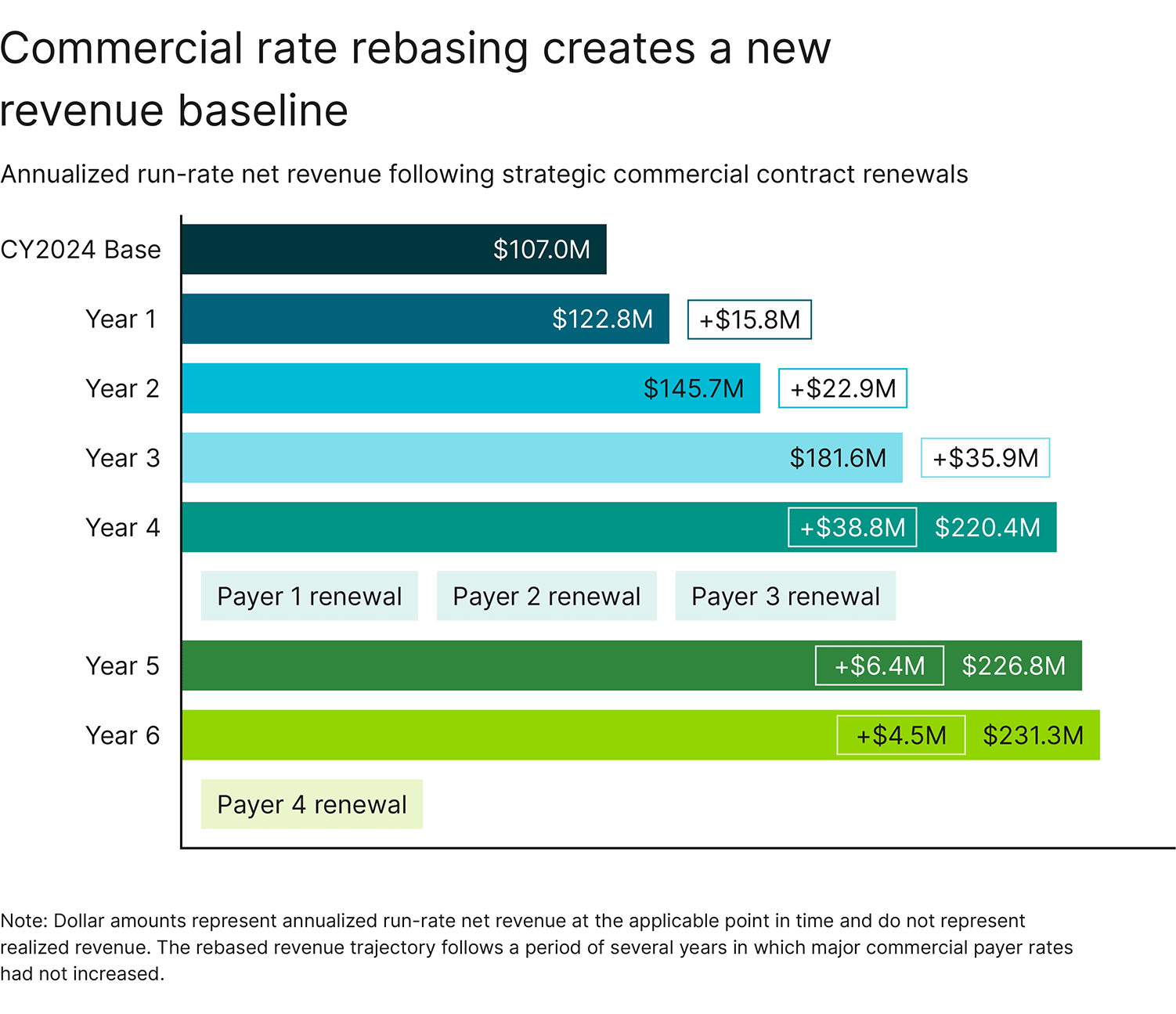
In just two years, Guidehouse helped a leading multispecialty faculty practice plan increase reimbursement rates with its top four Tier 1 commercial payers by an average of 30%. The renewed contracts represented $120 million in annualized net revenue run-rate improvement over a three-year period, creating a stronger financial foundation for future growth.
A faculty practice plan affiliated with a major U.S. academic medical center on the East Coast was being reimbursed at below-average rates for its top four Tier 1 payer contracts, which failed to account for its specialized expertise and complex care services. In-force contracts didn’t allow for year-over-year rate increases, leaving reimbursement unable to keep pace with rising operating costs following the COVID-19 pandemic.
Newly installed leaders recognized the significant impact this was having on the faculty practice plan’s margins. They engaged Guidehouse to help them develop payer-specific pricing targets, strengthen negotiation strategies, enhance financial modeling, and provide direct negotiation support to strategically re-position the physician group for a more sustainable future.
Our team developed and executed a payer portfolio strategy based on Guidehouse’s “Pay Me Right” strategy approach, which starts with the pre-negotiation process to develop a reliable, detailed, credible fact base covering:
Our payer strategy experts participated in discussions, supported the client’s negotiating team, and helped draft initial and counter proposals that included options for fee-for-service rates only, pay-for-performance, and lump sum cash payments. Our proprietary approach gave the faculty practice plan’s financial and managed care leadership a detailed view of how their rates compared with market benchmarks, helping them enter payer negotiations with clear, defensible rate targets.
Two of the practice’s four Tier 1 payer contracts and rate resolutions were finalized within just a week of their contract termination dates. When negotiations with the two remaining payers reached an impasse, we helped the practice create a contingency plan for out-of-network billing and compliance with the No Surprises Act, including operational changes that could be needed in connection with applicable independent dispute resolution processes. We also engaged strategic communications experts to support internal and external stakeholder messaging, preparing patients, clinicians, and staff for the possibility that the payers could go out of network.
Ultimately, an agreement was reached with all four payers, and we provided support for finalizing contracts and implementing agreed-upon terms. The entire process took only two years to complete.
We delivered substantial, enduring reimbursement rate improvements and helped the organization reach reimbursement parity across its major commercial payers. Across the four Tier 1 payers, renewed contract terms represented $120 million in combined annualized net revenue run-rate improvement over three years, including $91 million in annualized run-rate improvement from the health system’s largest payer and $29 million across the remaining three contracts.
This base patient revenue increase was a critical strategic priority, establishing the financial foundation needed before the practice could pursue broader enterprise growth initiatives
Guidehouse is a global AI-led professional services firm delivering advisory, technology, and managed services to the commercial and government sectors. With an integrated business technology approach, Guidehouse drives efficiency and resilience in the healthcare, financial services, energy, infrastructure, and national security markets.