

GuidehouseGuidehouse
Guidehouse
  • Industries
    All Industries
    Industries
    • Communities, Energy & Infrastructure
    • Defense & Security
    • Financial Services
    • Health
    • State & Local Government
    Europe, Middle East & Canada

    Europe, Middle East & CanadaShaping industries with global scale

  • Services
    All Services
    Services
    • AI & Data
    • Energy & Resilience
    • Finance & Revenue
    • Managed Services
    • Mission Enablement
    • Operations & Efficiency
    • People, Organization & Change
    • Risk, Regulatory & Compliance
    • Technology
  • Insights
    All Insights
    Insights
    2026 Trends Guide
    • Energy Providers
    • Government Agencies
    • Financial Services
    • Health
    featured content

    The GuideLine podcast: Finding balance through fast tech and high stakes

  • Careers
    All Careers
    Careers
    • Early Career
    • Contractors
    • Experienced Professionals
    • Veterans & Military
    Help Guide the Future

    Search & Apply for Jobs

  • About
    About Guidehouse
    About
    • Community Impact
    • Government Contract Vehicles
    • D.C. United Partnership
    • Ecosystem Partners
    • Europe, Middle East & Canada
    • Legal
    • News & Events
    • Leadership
    • Privacy Policy
    Guidehouse in
    DeutschlandIndiaLietuvaUnited KingdomView offices
Article

Pain points and strategies to improve the death claims process

Legal changes and degraded data hinder benefits reconciliation

By Jim Ouellette
May 29, 2024
purple abstract on white background
May 29, 2024

The financial strain of the pandemic and its aftermath is prompting states to broaden and hasten unclaimed property examinations and enforcement, tightening exemptions and shortening dormancy periods to mitigate budget shortfalls. While this increased focus on regulatory compliance is not new to insurers, rapid advances in machine intelligence to detect non-compliance are intensifying the need for sophisticated, data-driven methodologies to fulfill unclaimed property obligations. This growing need for precise and prompt data, however, is paradoxically met with more restricted and complicated access to the essential data sources that power these methodologies.

Before November 2011, the Social Security Administration’s Death Master File (DMF) was a comprehensive, accessible, and affordable repository of nationwide deaths available to approved entities, offering insurers an efficient and economical means to monitor the vital status of their policyholders using reliable data from the federal government. However, changes to Section 205(r) of the Social Security Act, effective on November 1, 2011, prohibited the disclosure of state death records except under specific conditions, resulting in the removal of 4.2 million records from the DMF and subsequent annual exclusion of more than 1 million records.


Gain limited insight at figher cost and increased complexity

In the years that followed, the Limited Access Death Master File (LADMF) emerged with a fraction of nationwide deaths, now capturing fewer than 20% of deaths in the United States. Access to this repository is limited to certified organizations that implement rigorous internal controls and obtain independent attestation from an Accredited Conformity Assessment Body. The certification process, which is both time-consuming and expensive, and the lack of a comprehensive alternative to the DMF, greatly complicates processes to collect data and evaluate claims. These added layers of complexity to an already onerous process are challenging for insurers to address on their own.
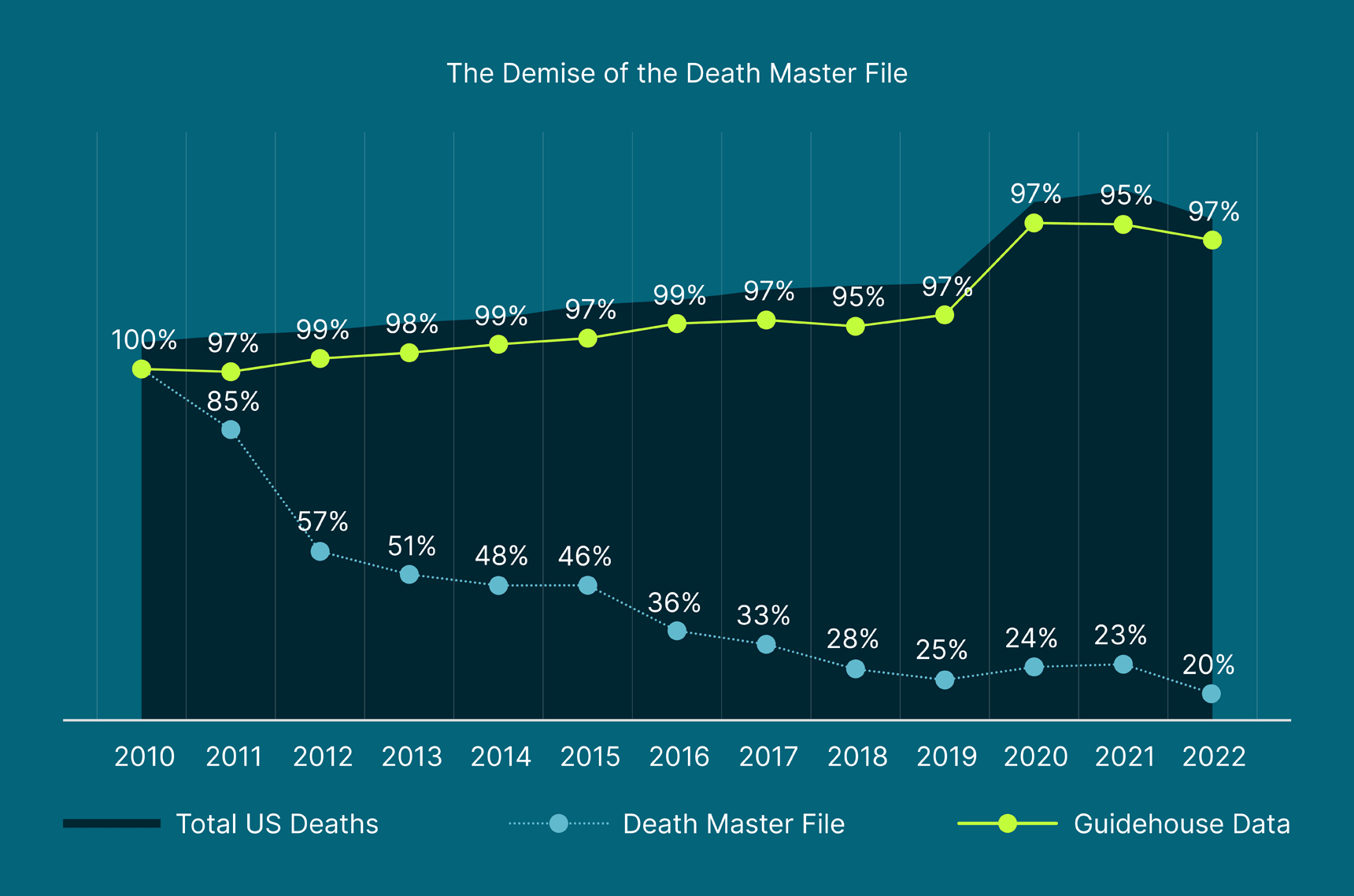
 

Death Master File

 
Navigating these changes means insurers must identify and integrate novel death data sources, assess the accuracy and completeness of these sources, and manage the intricacies of contradictory information across sources. This meticulous process can impede effective outreach to beneficiaries of deceased policyholders and reconciliation of policyholder benefits without guidance from a trusted advisor or death audit service provider.


Make better-informed decisions with differentiated data

As the reliability of mortality data from federal repositories declined, state vital statistics and local data collections emerged as promising alternatives, but challenges persist. Most states continue to impose data access and use restrictions, while others lack uniformity in their data release schedules, with updates occurring months or even years apart. Obituaries, funeral home notices, and other public death announcements provide a more localized view, but gathering and harmonizing this unstructured information from myriad sources is an immense task for most insurers.
 
While each death data source contributes to a broader data mosaic, the true value for insurers lies in integrating death data with commercial consumer information, such as address updates and credit reports. This synthesis of differentiated information equips insurers with more timely insights, enabling them to navigate an evolving regulatory environment and make better informed decisions.

RELATED INDUSTRIES

  • Financial Services

MORE ON THIS TOPIC

  • New York Abandoned Property regulation (NY 2 NYCRR 126.1) – mandated death validation
  • Insurer improves customer outreach campaigns with more accurate data
  • Unclaimed Property Audit Landscape Expands

Let us guide you

Guidehouse is a global AI-led professional services firm delivering advisory, technology, and managed services to the commercial and government sectors. With an integrated business technology approach, Guidehouse drives efficiency and resilience in the healthcare, financial services, energy, infrastructure, and national security markets.

Get in touch with our experts:

Stay ahead of the curve with our latest insights, expertly tailored to your industry.

Logo

outwit complexity™

Logo

outwit complexity™

Connect with us

Industries

  • Communities, Energy & Infrastructure
  • Defense and Security
  • Financial Services
  • Health
  • State & Local Government

Services

  • AI and Data
  • Energy & Resilience
  • Finance & Revenue
  • Managed Services
  • Mission Enablement
  • Operations
  • People Organization & Change
  • Risk, Regulatory & Compliance
  • Technology

About

  • Community Impact
  • D.C. United Program
  • Ecosystem Partners
  • General Inquiries
  • Government Contract Vehicles
  • Legal / Policies
  • Our Leadership
  • Privacy Policy
Insights
Careers
News & Events
Offices
  • Guidehouse In
  • Deutschland
  • India
  • Lithuania
  • United Kingdom
  • Privacy Notice for CA Residents
  • Modern Slavery Statement
  • Do Not Sell / Share My Personal Information
  • Cookie Settings & Do Not Sell My Personal Info
  • Global Human Rights Statement

© 2026 Guidehouse