




 Deutschland
 India
India Lietuva
 United Kingdom
 Search
 Search



The U.S. faces daunting housing supply challenges. Reports from the National Association of Realtors, Freddie Mac, Zillow, and other sources point to a shortfall of anywhere between 3.5 and 5.5 million housing units nationwide. In the second quarter of 2025, the median sales price of a home in the United States was $410,800, according to the Federal Reserve Bank of St. Louis, an increase of approximately 30% since the same period in 2020. Elevated mortgage rates and rising insurance and property taxes have pushed monthly payments to record highs, pricing out millions of potential buyers. Meanwhile, rental demand has soared, absorbing a wave of new multifamily units, yet supply is still falling short of need.
Compounding these issues are structural barriers that inhibit housing production. Regulatory constraints, such as restrictive zoning and lengthy permitting processes, exacerbated by local opposition to development, have weakened the traditional link between rising prices and increased supply. Without significant policy reform and investment, especially at the state level, the housing supply crisis will deepen, exacerbating the high cost of homes and limiting access to stable housing for millions of Americans.
Developing a national housing policy that can address the country’s housing shortage poses an immense challenge. No two states or regions are the same: Cities with large low-income populations have different needs than high-income suburbs, which in turn have different needs than rural communities. Finding a one-size-fits-all—or even one-size-fits-most—solution is nearly impossible.
Compounding the challenge is the fact that land use policies—a critical enabler of housing reform—have historically been left to cities and counties, which have little incentive to make the kind of policy changes that can address the housing shortage, since such changes tend to be met with grass-roots opposition.
States, by contrast, are local enough to determine priority populations—and, therefore, priority policies—but remain at a far enough remove from city and county politics to be insulated from street- and block-level activism.
Where should state leaders start? A good first step is looking at what their counterparts in other states are already doing. An overview of recent legislation—all of it passed since 2023—reveals a variety of innovative approaches to closing the housing supply gap. In some cases, the solutions are targeted. In others, multiple pieces of legislation have been combined into comprehensive packages.
Most of these legislative actions fall into six broad categories, from zoning and land-use reform to public education. Examined through the lens of local data, conditions, and needs, these approaches can serve as models for policymakers seeking tailored solutions in their own state.
1. Zoning and land-use reform
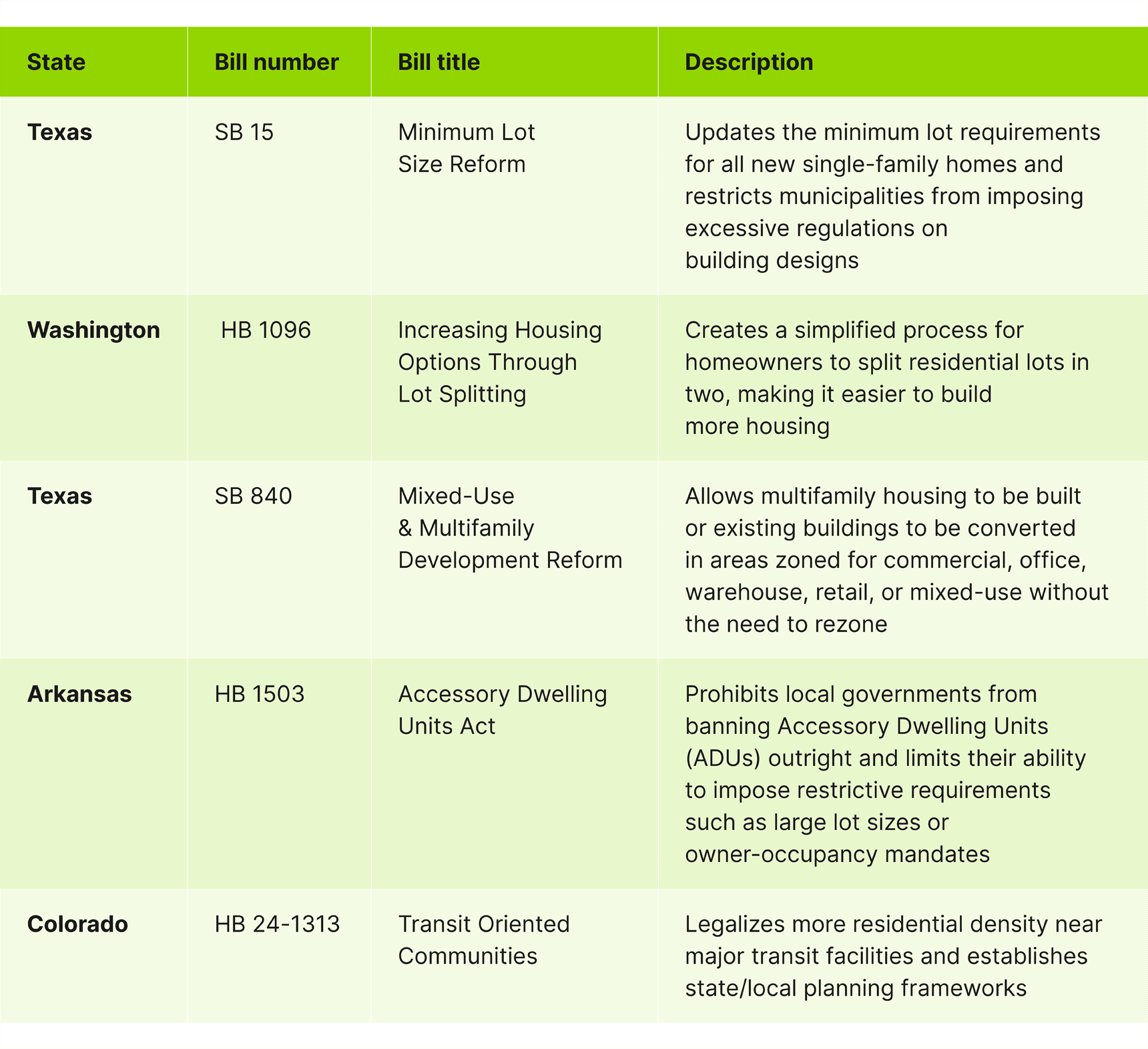
Zoning and land use rules play numerous roles, including mandating certain types of home designs and sizes, maintaining industrial or commercial zones, and requiring certain architectural styles. Changing zoning and land-use rules to facilitate increased housing production is one of the most powerful levers local governments have to address shortages. By updating outdated regulations, streamlining approvals, and embracing inclusive development, communities can unlock new housing supply, reduce the cost to build (and therefore purchase or rent), and create neighborhoods that are more affordable and attainable. Recent moves include:
2. Streamlining the permitting process
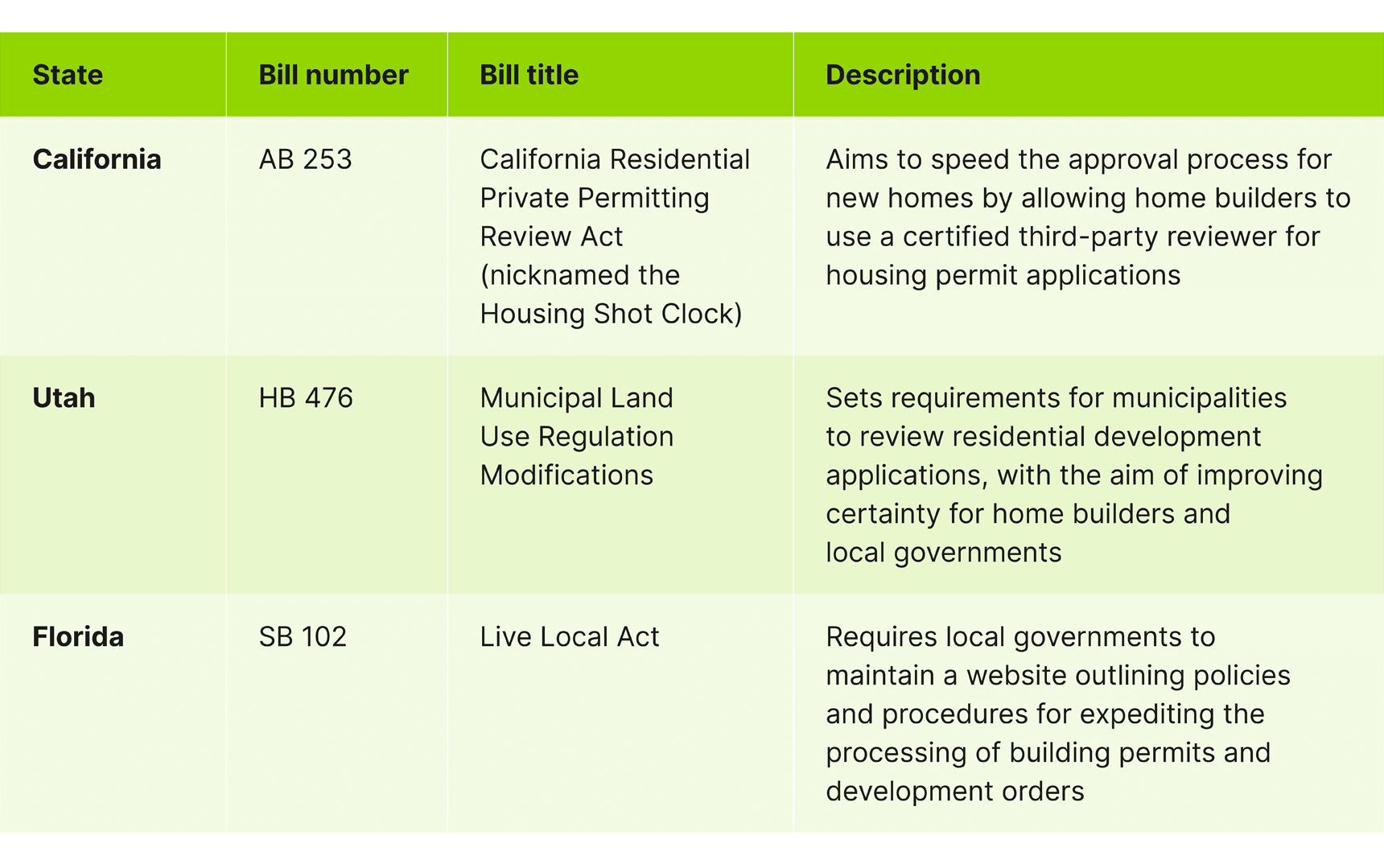
Permitting efficiency is not just a bureaucratic fix. It’s a housing supply accelerator. By reducing delays, increasing predictability, and lowering costs, efficient permitting enables faster, broader, and more affordable housing development. It also levels the playing field for developers by empowering smaller builders that don’t have the legal and administrative manpower to navigate complex and unintuitive permitting processes. Recent moves include:
3. Enacting changes to the building code
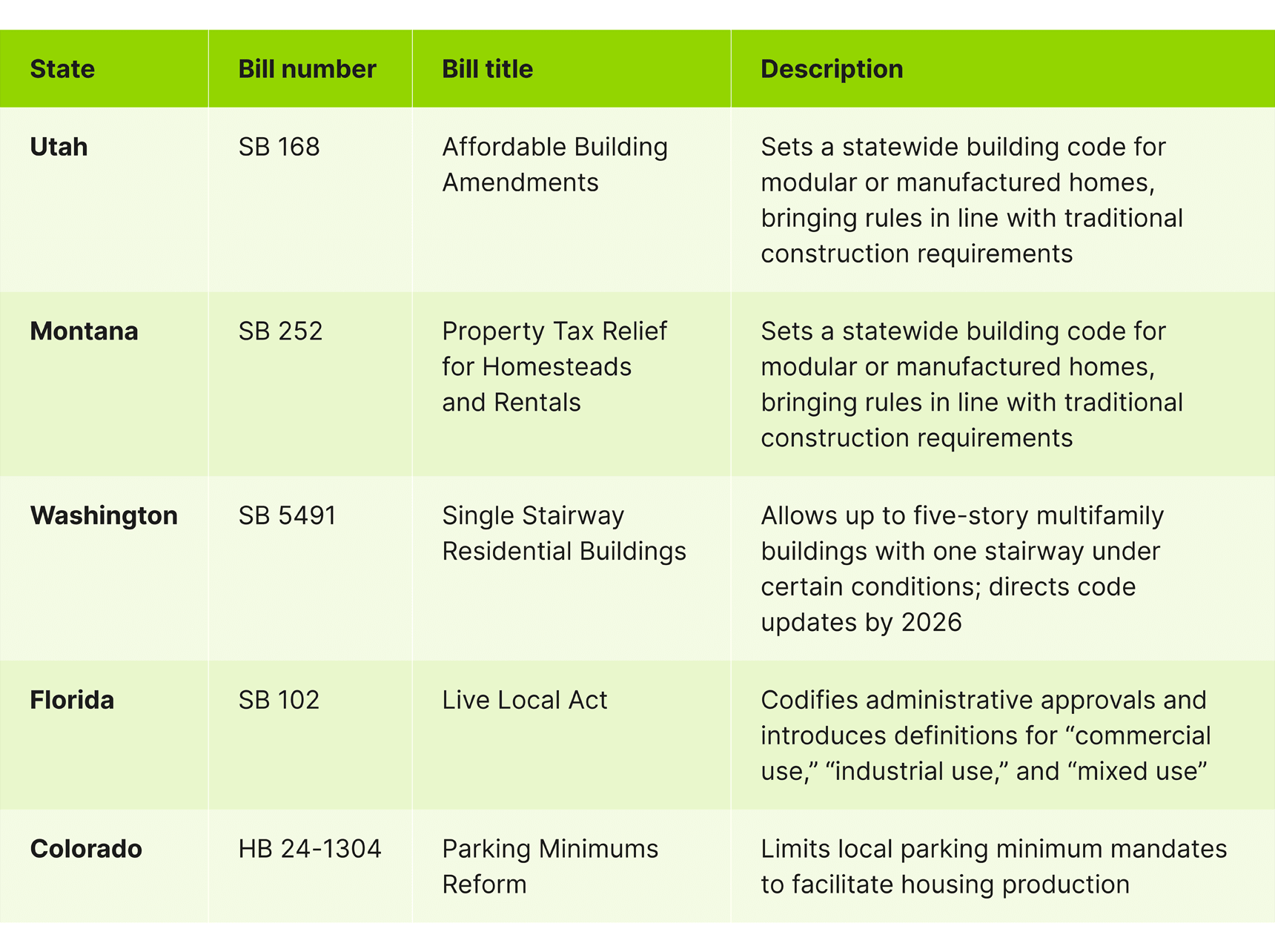
Some states have zeroed in on building codes as a key impediment to efficiently producing housing. States that seek to revise or update their building codes frequently focus on making it easier to build “missing middle” housing, such as duplexes, townhomes, and small apartment buildings (see No. 4, below). Recent moves include:
4. Creating “missing middle” housing
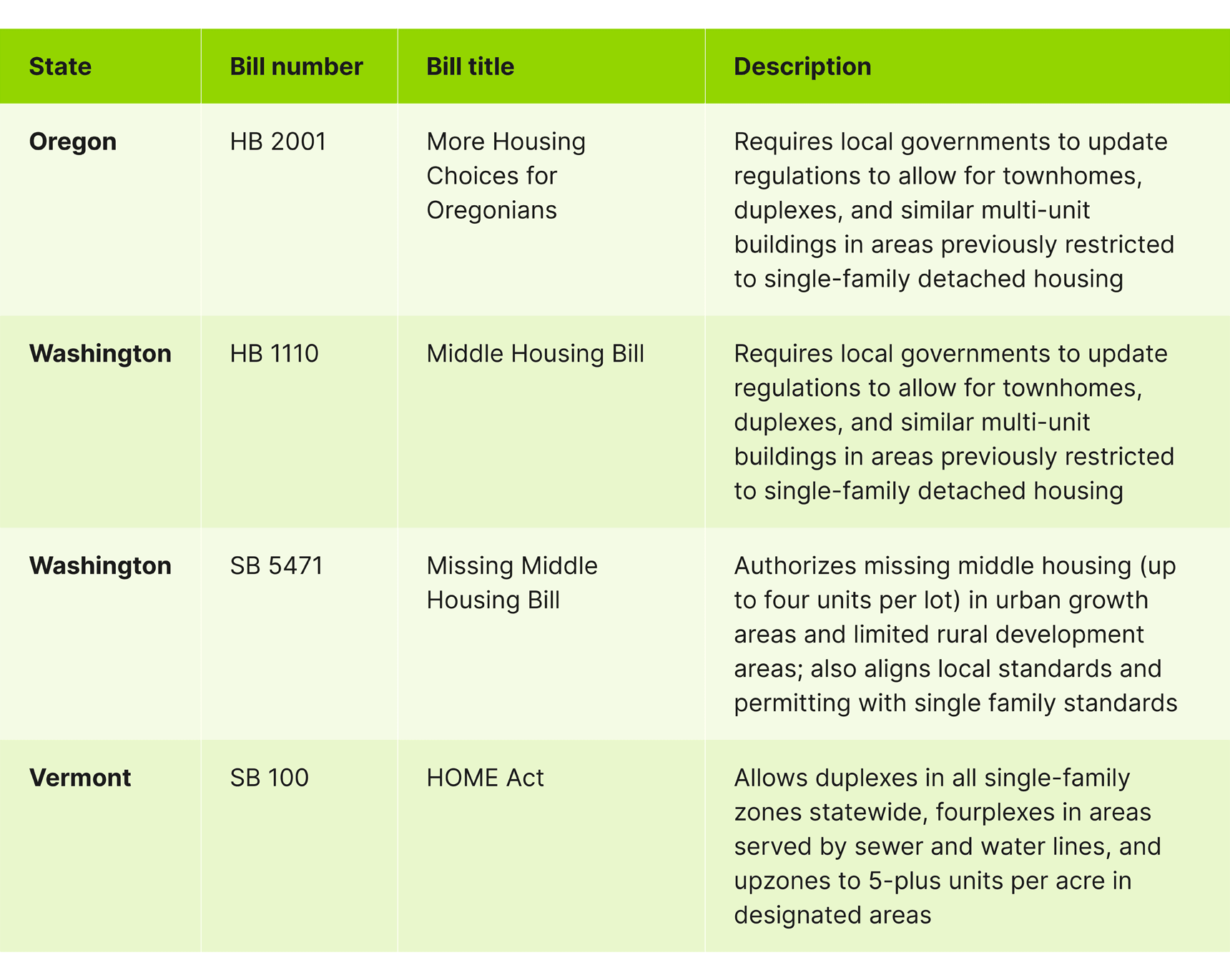
Housing that fills the gap between single-family homes and large apartment and condominium buildings plays a vital role in easing the supply crunch, especially for median income and essential workers such as nurses and teachers. Missing middle homes tend to be smaller than detached single-family homes and use less land per unit, and they’re usually less expensive to build than larger apartment buildings, as they tend to use lower-cost construction. Recent moves include:
5. New financing models
In an environment of rising construction costs and higher interest rates, it can be challenging for builders to finance housing in many markets. Public entities can play a role in providing lower-cost capital to help fill project gaps through avenues such as housing accelerator funds. Recent moves include:
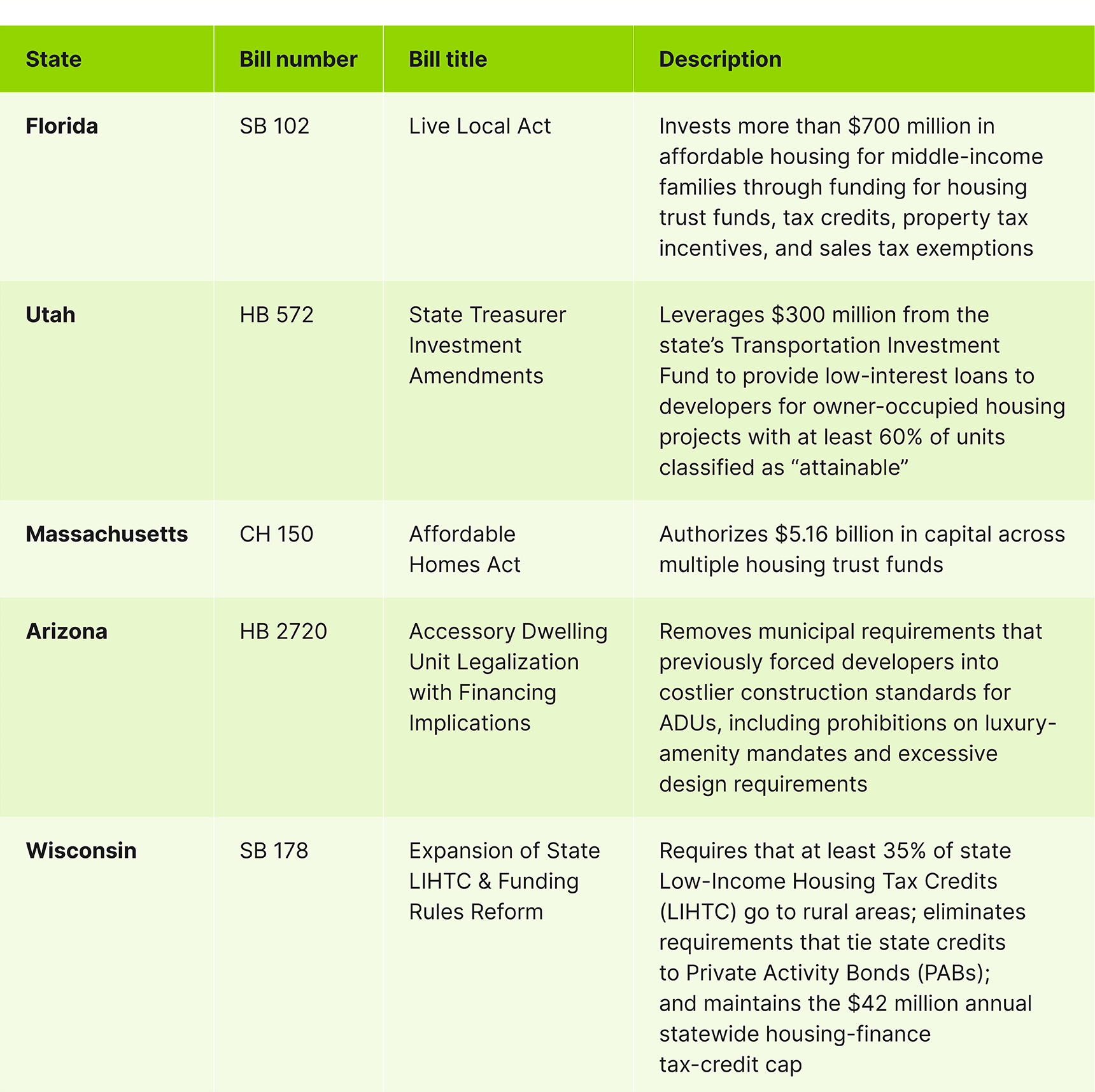
6. Public engagement and education
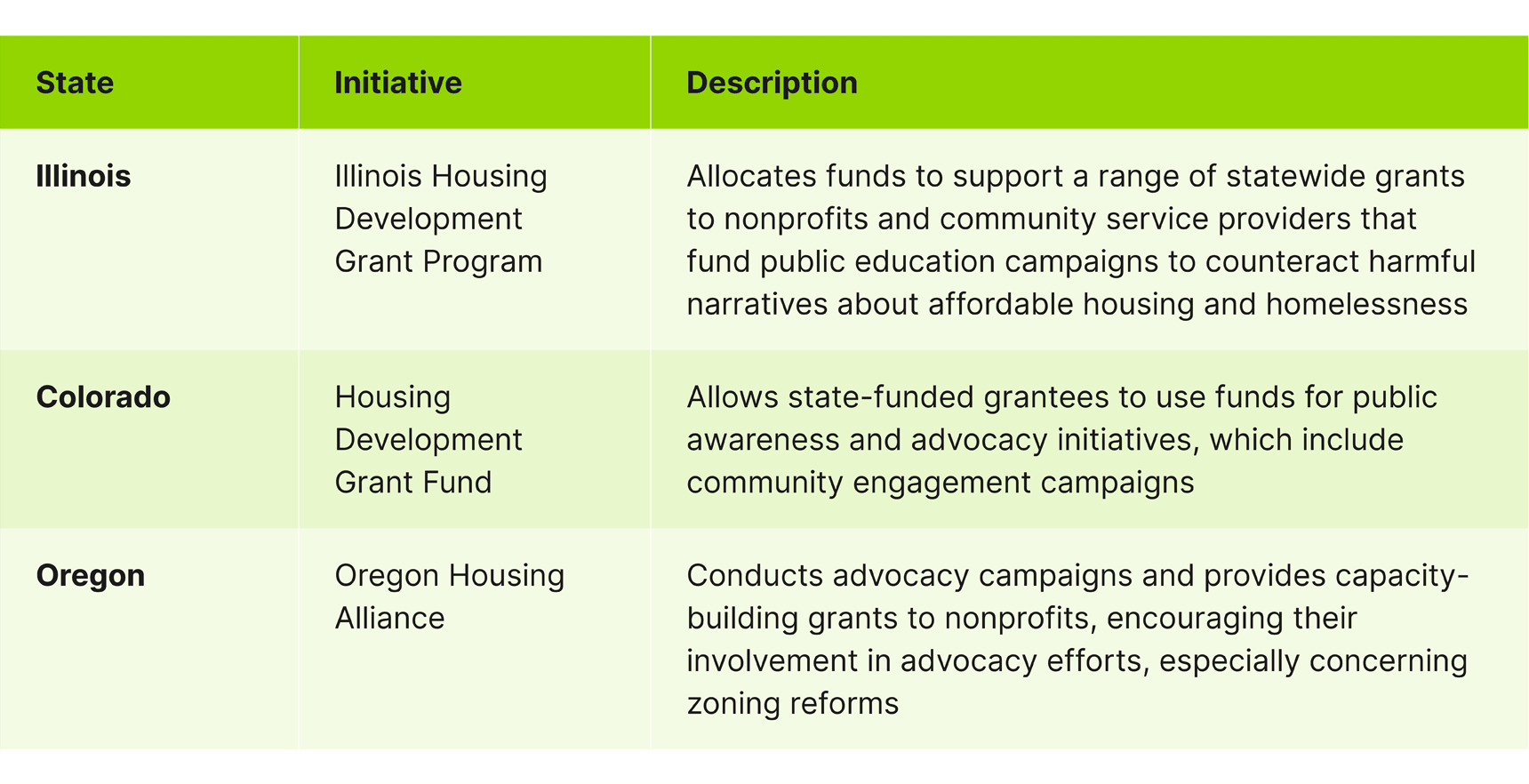
Proposals for building new housing often spark vocal community opposition. And yet Zillow research has indicated that supermajorities of voters in large metro areas support missing-middle housing in their neighborhoods. State leaders can tap into that latent support by cultivating public receptivity to zoning reforms, dispelling myths about affordable housing, and conducting other engagement and education initiatives. Education campaigns also empower nonprofits and community groups to advocate for change, while data transparency and accountability mechanisms ensure that reforms are implemented effectively. Recent moves include:
Successfully adapting other states’ innovative policy levers requires an airtight understanding of what will work, and what won’t, in the context of local conditions and needs. Gaining that understanding starts with a deliberate process consisting of three key steps:
While no single policy or legislative package offers a universal solution to America’s housing shortage, the diverse strategies emerging across states, from zoning reform and permit streamlining to financial incentives and building code modernization, demonstrate a growing commitment to innovation and collaboration.
Success will hinge on each state’s ability to tailor solutions to its unique housing landscape, informed by robust data analysis, inclusive stakeholder engagement, and sustained advocacy. As these efforts evolve, they can serve as roadmaps for state leaders seeking to build support for targeted, flexible policies that can close the housing gap and expand access to affordable homes for millions of Americans.

Gregory Heller, Partner
Guidehouse is a global AI-led professional services firm delivering advisory, technology, and managed services to the commercial and government sectors. With an integrated business technology approach, Guidehouse drives efficiency and resilience in the healthcare, financial services, energy, infrastructure, and national security markets.