




 Deutschland
 India
India Lietuva
 United Kingdom
 Search
 Search



Canada’s federal Major Projects Office (MPO) was created to help fast-track major infrastructure projects of national significance. But as we explored in a recent article, high-profile projects across the globe such as Three Gorges Dam in China, the Berlin Brandenburg Airport, the Pascua-Lima Gold-Silver Mine, and the Panama Canal Expansion offer cautionary lessons for the MPO to learn from.
Some of those projects have become publicly scrutinized case studies revealing cost overruns, schedule delays, and other problems. Even after completion, they continue to shape public confidence in the public sector’s ability to deliver large-scale infrastructure.
Many of them succumbed to the major projects short-term failure loop: a recurring pitfall characterized by early optimism, deferred decisions, and blurred lines of accountability. Together, they combine to hide the systemic, cumulative risks that push budgets and schedules off-track.
For example, the political optimism during project commissioning that’s shaped by the need to secure approval, momentum, and public support can often lead to unrealistic delivery expectations. If left unchecked, it can undermine delivery discipline and push well-intentioned projects off track in both budget and schedule. This initial framing tends to persist as projects move through planning, design, procurement, and execution. What starts as ambition becomes an operating assumption.
Against this backdrop, the MPO’s success will hinge not only on approval speed but on whether projects proceed with mature scopes, realistic budgets and schedules, unambiguous accountability, and robust risk assessment and structuring. This means intervening before projects begin to succumb to those drivers of failure.
In this context, we define “failure” deliberately and narrowly as delivery breakdowns measured primarily through cost overruns and schedule delays. These are the metrics used to judge major projects during execution. This definition is distinct from broader assessments of long-term strategic or economic value. A project that fails by these measures may ultimately still contribute to national objectives.
The right governance, processes, and discipline are essential from the outset of each project to ensure that avoidable obstacles are discovered early. The following steps help create the foundations for faster, more credible, and more resilient project execution.
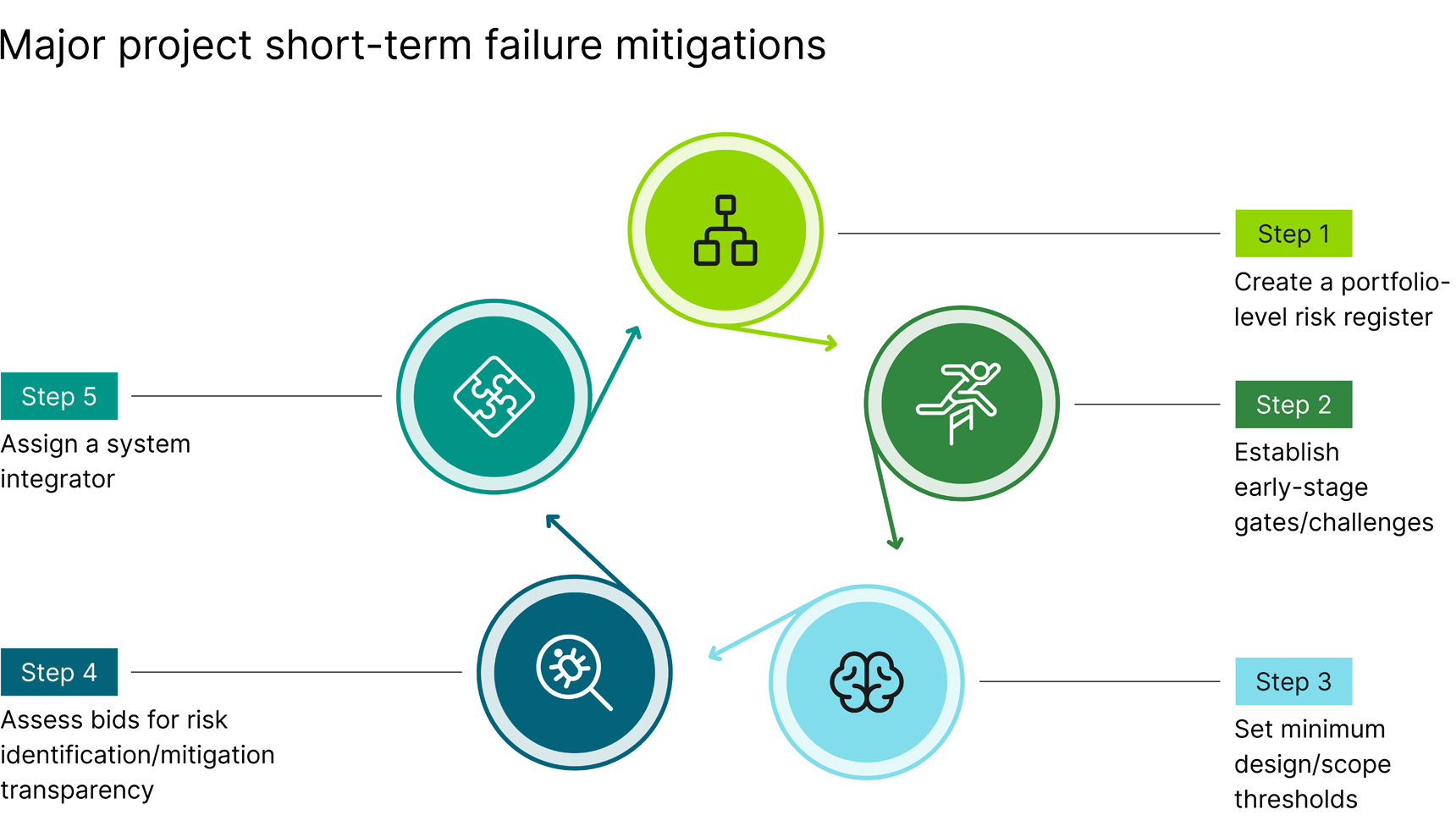
The MPO has the opportunity to help strengthen Canada’s long-term economic resilience and global competitiveness. Strategic investments in critical infrastructure can catalyze private capital, create durable high-quality employment, and increase domestic supply chain resilience.
But this will require a commitment to disciplined execution. Success won’t be measured by faster-moving projects but by whether leaders confront delivery risk early—before short-term failure becomes locked in.
This is the second in a four-part series exploring challenges facing the MPO, with the first article introducing cautionary lessons from major project failures. The third describes ways to prioritize and secure accountability, with the final article outlining how the MPO can support and advance major projects that leave a lasting legacy.
Guidehouse is a global AI-led professional services firm delivering advisory, technology, and managed services to the commercial and government sectors. With an integrated business technology approach, Guidehouse drives efficiency and resilience in the healthcare, financial services, energy, infrastructure, and national security markets.