




 Deutschland
 India
India Lietuva
 United Kingdom
 Search
 Search



Summary
An organization enlisted Guidehouse to design, implement, and support a state-of-the-art extended reality (XR) lab to help researchers visualize molecular structures, medical images, and complex datasets. Guidehouse’s unique XR-as-a-Service (XRaaS) model removes adoption barriers, enabling staff to focus on core scientific priorities.
A Guidehouse client wanted to expand access to immersive technologies to further their research, collaboration, and storytelling. Wider adoption was hindered by research and business silos and significant barriers related to IT security, device management, and process standardization. Guidehouse subject matter experts embedded at the client had spent several years incorporating virtual reality (VR) and augmented reality (AR)—collectively known as extended reality, or XR—into their work supporting scientific and biomedical data exploration. Leaders at Guidehouse and the client sought to broaden access to the technology to encourage scientific innovation and collaboration.
Guidehouse proposed creation of an XR “lab” at the client’s site that would provide end users with hardware, software, technical support, and deep subject matter expertise. A multidisciplinary team under the organization’s CIO was established to spearhead the effort, including a program manager, scientific subject matter experts, immersive technology software engineers, specialists in biomedical 3D visualization and visualization technology, and cybersecurity and network engineers.
The team designed and implemented an XR-as-a-Service (XRaaS) model to support effective adoption. This unique model:
The lab is a state-of-the-art resource for researchers and collaborators. It offers interactive data visualization that enables exploration of molecular structures, medical images, and complex datasets. taff also leverage AI-driven VR/AR training to build professional and leadership skills, including presentation and communication. The space features a dozen advanced VR-ready workstations, 18 VR headsets, a 16-foot touch-enabled LED wall, and an integrated A/V system for a seamless hybrid teleconferencing experience. The lab has been fully integrated with Guidehouse’s broader work at the client—including 3D printing, data sharing, and collaborative scientific research—to create a unified set of resources that drive innovation.
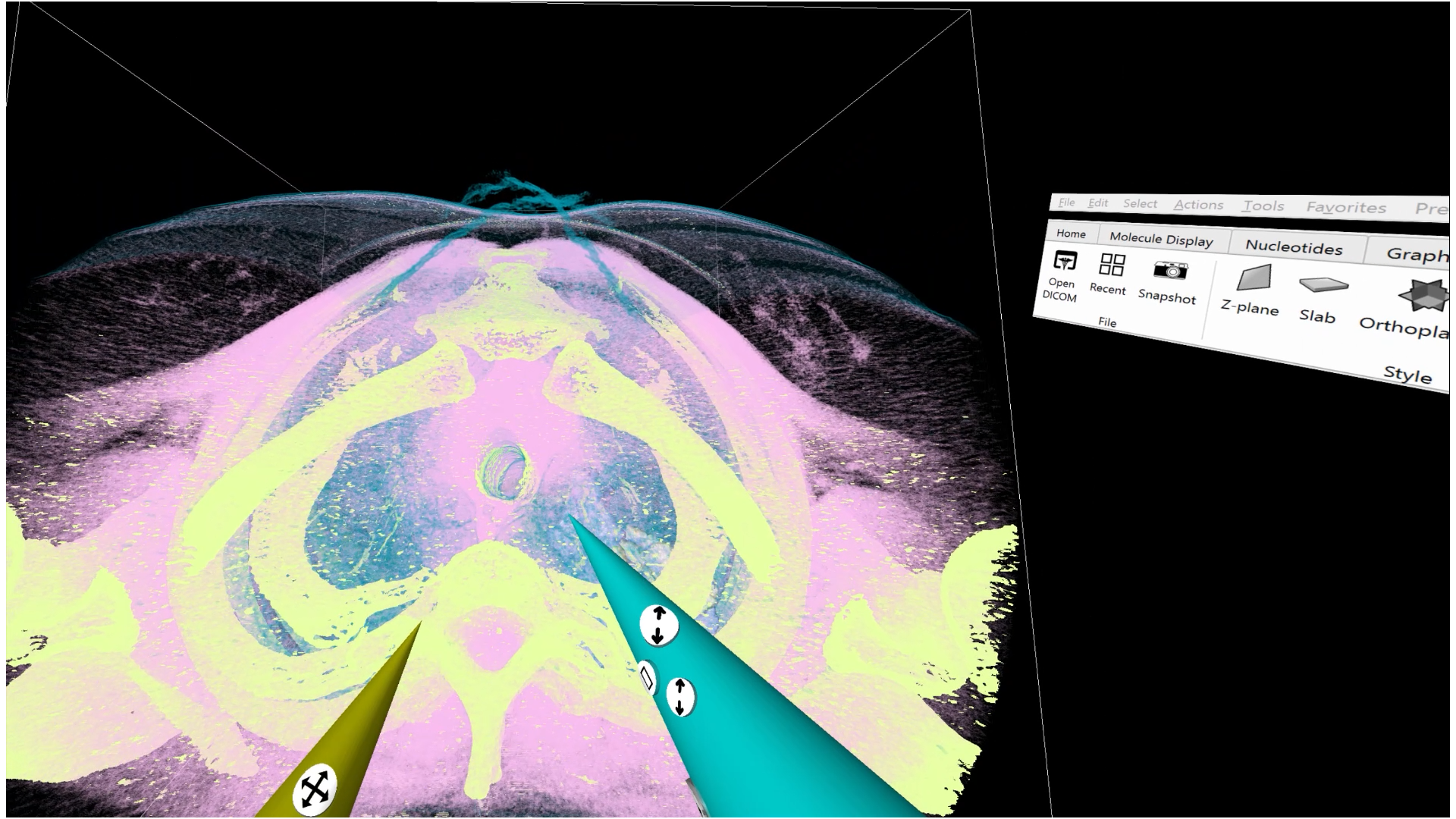 A view from a researcher's virtual-reality (VR) headset in the lab.
Impact
The XRaaS model removes adoption barriers, enabling staff to focus on core scientific priorities. Immersive data exploration is now available by appointment—no prior experience required. At the organizational level, this centralized resource lowers costs, mitigates cyberinfrastructure challenges, and introduces efficiencies across technical and business operations.
The lab continues to evolve alongside technological advancements and shifting organizational priorities. With Guidehouse’s support, the client extends these resources to the broader health community, fostering cross-disciplinary insights and collaboration. By showcasing scientific and operational use cases, the lab creates meaningful value and strengthens the organization’s reputation for IT innovation in advancing public health.
Guidehouse is a global AI-led professional services firm delivering advisory, technology, and managed services to the commercial and government sectors. With an integrated business technology approach, Guidehouse drives efficiency and resilience in the healthcare, financial services, energy, infrastructure, and national security markets.